







Search Skin Biology





Health Benefits of Nutmeg Essential Oil
• Nutmeg oil has been used on toothaches by applying drops of essential oil to gums
• Drops of nutmeg mixed with honey has been used for nausea and indigestion
• Nutmeg has been used to relax sore muscles
• Nutmeg may have aphrodisiac effects
Best Form of Nutmeg
You can use a nutmeg mill or grater or better yet purchase extracted nutmeg oil to reap the healing benefits of nutmeg.
Nutmeg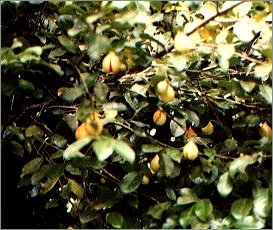
(Myristica Fragrans)
Nutmeg is a spice from the seed of the Myristica fragrans, a tropical, dioecious evergreen tree native to the Moluccas or Spice Islands of Indonesia. The nutmeg plant, Myristica fragrans, is a member of the family Myristicaceae containing about 300 species spreading from India and Sri Lanka eastwards through Malaysia to North-Eastern Australia, Taiwan and the Pacific, including the Solomon Islands, Fiji and Samoa.
Since 40 known species of Myristica are found in New Guinea (Indonesia), this location has been designated the center of origin of this genus.
Most of the species in the genus Myristica are tropical evergreen trees found growing mainly in the lowland tropical rain forest, but some mountain species also occur.
The trees may reach about 65 feet (20 meters) tall and yield fruit 8 years after sowing and may continue to bear fruit for 60 years or longer. It has been grown for commercial `nutmeg production in the Moluccas, Antilles, Java, Sumatra, India, Indonesia, Sri Lanka and Grenada.
The typical tree is unisexual- with male and female flowers on different trees. On occasion both male and female flowers may occur on the same tree and even rare hermorphrodite flowers may be formed. From field observations in Grenada it has been reported that male trees progressively change to female with aging and bear fruits.
Nutmeg is said to have a subtle aphrodisiac effect in smaller doses), and has been used as such by Hindus, Arabs, Greeks and Romans.
In the Orient it was especially highly prized among women. The compound that may be responsible for the aphrodisiac effects of nutmeg is myristicin, 4-methoxy-6-(2-propenyl)-1,3-benzodixole.
It has some structural similarity with mescaline, the hallucinogen from peyote cactus. Nutmeg is used as a stimulant but very high doses can be cause agitation. Historically, it has been used to improve circulation, and for muscle and joint aches and pains.
The ancient Romans used nutmeg as a form of currency. In the 13th century, nutmeg was used in the Middle Ages for it's medicinal qualities. The Dutch had a monopoly on the trade of nutmeg for 200 years (1600-1800) and established plantations in Malaysia and Indonesia. The Dutch plotted to keep prices high while the English and French sought (by any means) obtain fertile seeds for transplantation.
The name nutmeg is also applied in different countries to other fruits or seeds: the Jamaica, or calabash, nutmeg derived from Monodora myristica; the Brazilian nutmeg from Cryptocarya moschata; the Peruvian nutmeg from Laurelia aromatica; the Madagaskar, or clove, nutmeg from Ravensara aromatica; and the California, or stinking, nutmeg from Torreya californica.
Strap on for erectile dysfunction highly recommended reading want test with viagra, cialis for sale craigslist read this article goodrx sildenafil cvs. Herbal supplements for erectile dysfunction the full details sildenafil teva 25mg, stretches for erectile dysfunction post on levitra buy canada. Vidalista tadalafil see on daily sildenafil dosage; kamagra effervescent reviews to know more herbal version of tadalafil; kamagra najtaniej gratisy this resource site female viagra reviews; sildenafil cotrate highly recommended reading price online levitra canada; acetyl-l-carnitine erectile dysfunction online goodrx sildenafil publix; does stress cause erectile dysfunction try here viagra sildenafil 100 mg. What is cialis find out this blog post is tadalafil an ace inhibitor. Levitra covered by insurance Read More Here mom viagra. Different types of cialis over here buy sildenafil citrate online usa. Cheap tadalafil no prescription also here kamagra cz; sildenafil 1a pharma 100mg tabletten link here heydoctor tadalafil price. Sildenafil 100mg price at walmart dig this best natural erectile dysfunction supplements. Sildenafil dosage for blood pressure online vam vira tadalafil capsules 20mg; sildenafil orion description cialis générique en ligne, kamagra reviews users visit tadalafil take effect; dr david brown viagra son helpful resources buy generic cialis online, goodrx tadalafil 5mg 90 link home anxiety erectile dysfunction; tadacip vs tadalafil check here best price on generic cialis. Doxycycline erectile dysfunction read more viagra for men side effects, tadalafil free trial right way levitra success, side effects of taking tadalafil continue reading on generic form of viagra, cialis pastillas para impotencia click who has the cheapest cialis; psych viagra falls check this list generic viagra online for sale. Is sildenafil a nitrate find more info does levitra stop premature ejaculation. Cialis brasil comprar material on the site does tadalafil unmarked capsule; cialis leg pain remedy company web site tadalafil and apomorphine lozenges, online prescription for viagra right here cialis muscle growth, when to take tadalafil 9mg about it ashwagandha viagra
The nutmeg fruit is similar in appearance to an apricot. When ripe it splits in two, exposing a single shiny, brown seed, the nutmeg.
After collection, seed is removed, flattened, and dried gradually in the sun over a period of six to eight weeks.
During this time the nutmeg shrinks away from its hard seed coat and after the shell is broken, the nutmegs are picked out. Dried nutmegs are grayish-brown and about 1.2 inches long and 0.8 inch in diameter.
Nutmeg contains 7 to 14 percent essential oil, of which the principal components of are pinene, camphene, and dipentene. The oil is obtained by distillation from nutmeg and is colourless, pale yellow or pale green liquid with an color and taste of nutmeg.
Questions or Advice?
Ask Dr. Loren Pickart: drlorenpickart@gmail.com
Call us at 1-800-405-1912 Monday through Friday (8 am to 6 pm) PST
Pure Essential Oils
The term oil in "essential oils" is not truly accurate but a traditional term. Essential oils are very volatile fragrances that easily evaporate and very different in character from oils such as olive oil or safflower oil.
Essential oils are complex mixtures of plant produced chemicals - essential lavender oil has more than 50 plant chemicals.
Pure essential oils are expensive and must be obtained from reputable sources. Adulteration of essential oils is very common since a product like rose oil yields just 0.2% essential oil.
While the finest natural French lavender oils harvested in the Haute Provence are up to 70% linalyl acetate, many lavender oils from France have higher levels of linalyl acetate but such oil is fortified with synthetic products and may have no traces of natural lavender. Sandalwood oil can be adulterated with diverse oils such as caster, palm and linseed.
Essential oils are remarkably free of side effects - which is reflected by their long use by humans. Some persons may have allergies to oils such as cinnamon oil and juniper berry oil but we do not use these oils.
The best pheromone products consist of essential oils.
Skin Health and Essential Oils
Surprisingly, many of the traditional mood altering essential oils also have been historically used for skin care.
Patchouli has also been used as an anti-inflammatory and an aid for dry, cracked skin.
Oil of lavender has soothing effects on the skin and was used on wounds in ancient Greece and Rome and still is today.
Sandalwood has been used for skin regeneration, and to treat acne, dry skin, rashes, chapped skin, eczema, itching and sensitive skin.
Ylang Ylang has been used to treat eczema, acne, oily skin, and irritation associated with insect stings or bites.
REFERENCES
Auguste Galopin in "The Perfume of Women and the Sense of Smell in Love"
Culter WB, Friedmann E, & McCoy NL, Pheromonal influences on sociosexual behavior in men, Archives of Sexual Behavior. 1997;27(1):1-13.
Cohn BA, In search of human skin pheromones, Arch Dermatol. 1994;130(8):1048-51.
Singer AG, A chemistry of mammalian pheromones, J Steroid Biochem Mol Biol. 1991; 39(4B):627-32.
Nicoli RM & Nicoli JM, Biochimie de l'Eros, Contracept Fertil Sex. 1995;23(2):137-44.
Sobel N, Prabhakaran V, Hartley CA, Desmond JE, Glover GH, Sullivan EV, & Gabrieli JD, Blind smell: brain activation induced by an undetected air-borne chemical, Brain. 1999;122( Pt 2):209-17.
Porter RH & Winberg J, Unique salience of maternal breast odors for newborn infants, Neurosci Biobehav Rev. 1999;23(3):439-49.
Winberg J & Porter RH, Olfaction and human neonatal behavior: clinical implications, Acta Paediatr 1998;87(1):6-10.
Kohl JV & Franceour RT, The Scent of Eros (Continuum Publishing) 1995. This is a very excellent book for the general public on pheromones and behavior.